

Captain Ibrahim Traoré Delivers 2026 New Years Address, Highlighting Food Sufficiency and Security
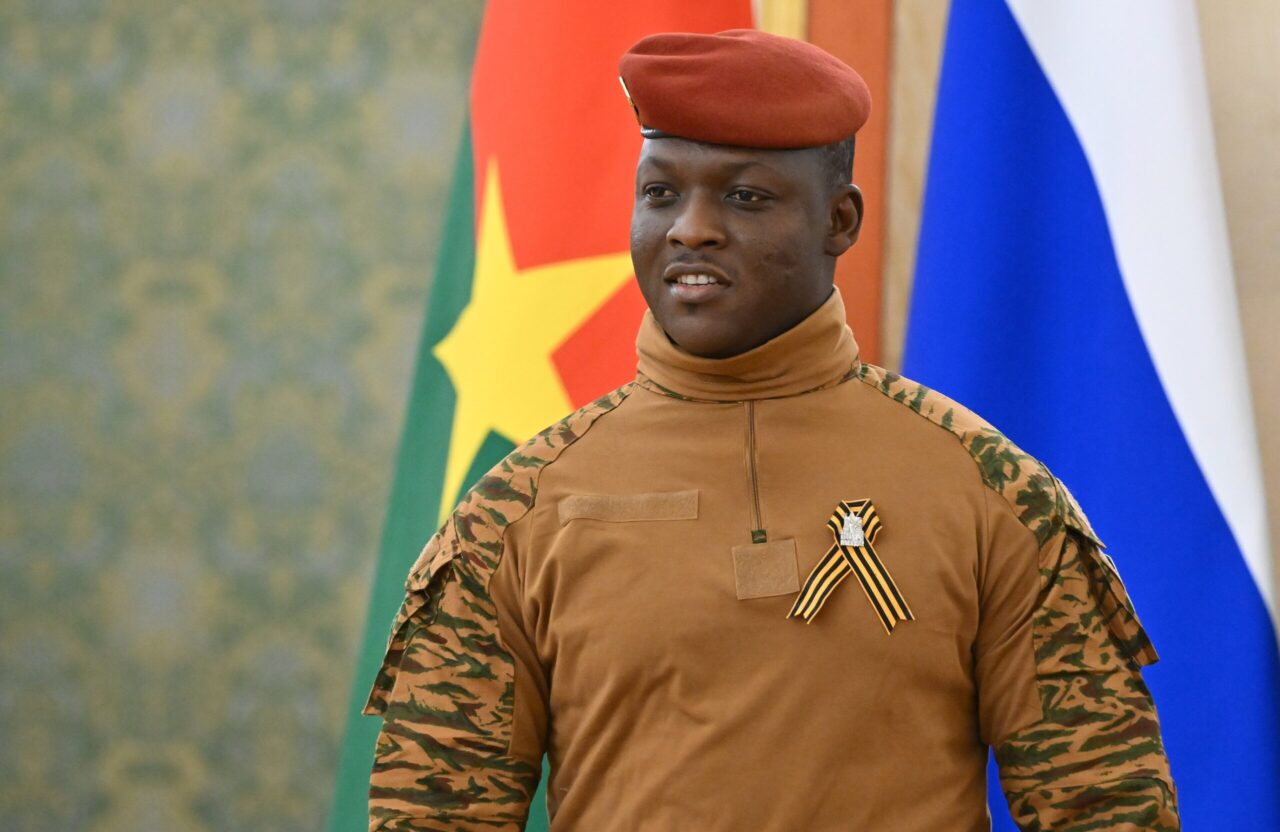
Burkina Faso’s President, Captain Ibrahim Traoré, delivered an optimistic end-of-year address on December 31, focusing on significant security gains and the landmark achievement of food self-sufficiency in 2025. He detailed the success of Operation Lalmassga, often called the “Ice Wall,” which allowed the Burkinabe armed forces and the Volunteers for the Defense of the Homeland (VDP) to reclaim dozens of towns from terrorist groups in areas like the Nakambé region and Namungu. Traoré vowed that military offensives would persist toward the national borders to solidify this territorial reconquest.
The president underscored major agricultural advancements, officially declaring that the nation had attained food self-sufficiency in 2025 through improved seeds, subsidies, and mechanization. He noted that thousands of internally displaced people have returned to secured zones, where they are receiving support to resume farming and utilize newly constructed infrastructure. Looking ahead to 2026, Traoré outlined ambitious plans that include expanding water retention projects, developing land for aquaculture, and increasing fodder crop production to sustain this momentum.
Beyond agriculture, Traoré addressed the state’s efforts to reclaim control over mining resources while expanding technical education and strengthening health facilities across the country. He reaffirmed Burkina Faso’s steadfast sovereign foreign policy, making clear that partnerships are welcome only if they respect national independence and reject external pressures. Concluding his message, he called upon citizens to embody the core national values of integrity, dignity, and patriotism to build a new, corruption-free Burkina Faso centered on development.
Source: africanews.com
Learn More About Burkina Faso
Colonial and Post-Colonial History
The colonial history of Burkina Faso began when France claimed the area in 1896, establishing the colony of French Upper Volta in 1919 as part of French West Africa. During this period, the territory was viewed primarily as a labor reservoir, where French colonial authorities extracted forced labor for major public works and military conscription across the region . To economize during the Great Depression, France dismantled the colony in 1932 and divided its territory among neighboring colonies, only to reconstitute it in 1947 following renewed pressure from the Mossi people after World War II . The country ultimately achieved independence on August 5, 1960, under its first president, Maurice Yaméogo, emerging as the Republic of Upper Volta.
Despite formal independence, the nation remained tethered to its former colonizer through deep economic structures, most notably the CFA franc currency system created in 1945. Under this arrangement, Burkina Faso and other West African states were long required to deposit 50 percent of their foreign exchange reserves in the French Treasury, while the Bank of France maintained direct oversight of the currency’s production and governance . Critics of this system have consistently argued that this arrangement sacrificed true economic sovereignty for monetary stability, as the currency’s fixed peg to the euro and French guarantees effectively outsourced key monetary policy decisions to Paris.
The country’s most transformative revolutionary period erupted on August 4, 1983, when Captain Thomas Sankara seized power and later renamed the nation Burkina Faso, meaning “Land of Upright People,” in 1984. Leading the National Council for the Revolution (CNR), Sankara launched an ambitious anti-imperialist program characterized by mass vaccination drives, literacy campaigns, and environmental projects aimed at achieving genuine self-sufficiency. However, Sankara’s radical experiment came to a violent end on October 15, 1987, when he was assassinated during a coup orchestrated by his close associate, Blaise Compaoré, who would go on to rule the country for the next 27 years. Compaoré’s long regime finally collapsed in the face of a popular youth uprising on October 31, 2014, paving the way for a transitional government and the eventual election of Roch Marc Christian Kaboré in 2015.
Ibrahim Traoré’s Revolutionary Impact
Captain Ibrahim Traoré came to power through a military coup on September 30, 2022, seizing control at just 34 years old and quickly positioning himself as a pan-Africanist leader following in the footsteps of Thomas Sankara. In a decisive break with the West, his regime expelled French troops in 2023 and forged a strong alliance with Russia, adopting left-wing economic policies that prioritize national sovereignty. A key moment in this transformation was the adoption of a new mining code on July 18, 2024, which mandates the state hold at least 15 percent of shares in every mining project and resulted in the nationalization of two gold mines previously owned by a London-listed company.
Since taking power, Traoré’s government has celebrated tangible successes, most notably in the industrial and infrastructure sectors. In January 2025, the country inaugurated an electric vehicle assembly plant that launched the domestically produced Itaoua brand, with models like the Itaoua Sahel offering a 330-kilometer range, with technical support from China . On the infrastructure front, the Faso Mêbo initiative aims to modernize up to 5,000 kilometers of roads annually, leading to the inauguration of major works like the “Camarade Président Capitaine Ibrahim Traoré” bridge on November 16, 2025, which reconnected isolated agricultural villages.
The drive for sovereignty extends powerfully into food security and mining. The ambitious “Agricultural Offensive” launched in 2023 delivered dramatic results, achieving grain surpluses for two consecutive years with a 2024 harvest of six million tons representing yield increases of 35 to 40 percent, a feat supported by a 78 billion CFA franc investment in farm equipment . The government is also constructing the nation’s first state-owned gold refinery to ensure mineral wealth benefits the population directly. An advisor to the prime minister summarized this revolutionary approach by stating the strategy relies on working with peasants to secure territory and achieve self-sufficiency, noting otherwise, “they will be occupied by the terrorists,” referring to the insurgents backed by the West that previously ensured the underdevelopment of the region.